August 22, 2006

When the Levees Broke: A Requiem in Four Parts

I just got done watching Spike Lee's new HBO documentary, "When the Levees Broke: A Requiem in Four Acts." My wife, who was born and raised in Slidell, just across the lake from New Orleans, a community equally hard hit by Katrina, had to get up and leave the room because she thought she might have a panic attack. That's how striking this documentary is. And I'm pleased to report that Lee achieves this without taking any of Michael Moore's effective yet impudent (adj 1: marked by casual disrespect; "a flip answer to serious question") tone. Moore's brand of mock naivete and sass isn't appropriate here. And why not? I kept wondering as I watched. Why isn't Spike narrating over top of these images? I kept waiting for his now iconic voice--that kid-trying-to-be-cool voice that I first heard in Air Jordan commercials back in the late 80s--to come in with that hip-hop politico swagger, but he restrained himself. And what a difference it makes.

Although there are some moments where the nice is twisted, particularly at the beginning when Louis Armstrong sings "Do You Know What it Means to Miss New Orleans?" over top of stock news footage of the inundated city. For me, this is the big question that the documentary is asking me to grapple with. The photos and news footage gathered from CNN and other networks ask us to review the evidence and ask: Can you fathom this? How could this happen? Human beings left for four or five days without food or water at the New Orleans Convention Center and on interstate overpasses. Armed mobs blocking the Crescent City bridge so that inner-city New Orleanians cannot seek shelter in their white enclave.

What results truly is a requiem, a solemn service to the dead. In short, Lee has done this right. He has jazz musician and composer Terrance Blanchard as a talking head and a contributor of original music for the soundtrack--one that doesn't just--again, like Moore--ironize, but that rounds off the sharpness, the sting of the photos in such a way that doesn't feel sentimental, very much anti-CNN. After all, sentimentality, according to Flannery O'Connor is "an early arrival at a mock state of innocence," a condition that leads to obscenity rather than actual grief.

It is grief that a requiem, in its very structure and solemn pageantry, is meant to provide a proper outlet. It is is meant to affirm the gift of life even amidst doubt and darkness. Without having seen the second part, which airs tonight on HBO, it's too soon to say where Lee will leave us off, but I suspect we won't be let off easy.

Lee's documentary reminds me of a classic of the genre, Harlan County, USA, in which poor white coal miners and their families eek out an existence in a place that looks like a Sebastio Salgado photograph. Similarly, "When the Levees Broke" shows America to be not so different than your typical despot-ruled third world country: concerned primarily with wealth and war.

August 12, 2006

Book is Out, Apparently

Well, it seems that the book is out. Finally, after many delays and false alarms and sabotage attempts--no lie--by disgruntled employees of at the printer in Montreal, the book is, apparently, in warehouses all across the country. I say apparently because Amazon.com has changed the status of the book's availbilty from "We have no fricking clue. Good Luck!" to "In Stock."

And,also apparently, the book is selling. As of this morning, Amazon.com tells me, there are "only 3 left in stock" at their warehouse. I'm hoping that this means hundreds of copies have been shipped to the four corners of the earth; although, I suspect that several dozen are heading for Perrysburg, Ohio--where my parents live.

The next step is to place some excerpts from the book in various places to promote more sales. So far I have leads with Killing the Buddha , the award-winning online website for those who aren't exactly atheists but aren't exactly believers either and The Huffington Post, the online political and cultural news clearing-house. This last lead has an interesting wrinkle in that the editor I've been working with is passing my book on to John Cusack, who, she told me, expressed interest in the premise of my book. Apparently, she was talking with John at a party at Arianna Huffington's house one evening and mentioned my book to him and he--who has just finished shooting a film in which he plays a guy whose wife is killed in the line of duty while serving her country in Iraq--apparently--said, "I'd liked to check it out."

Weird. Wonderful.

July 08, 2006

Review in the National Post of Canda

Randy Boyagoda, author of the forthcoming novel "The Governor of the Nothern Province" (Penguin Canada, September 2006), chose Good War for his Hot Summer Reading list. Below are his kind words:

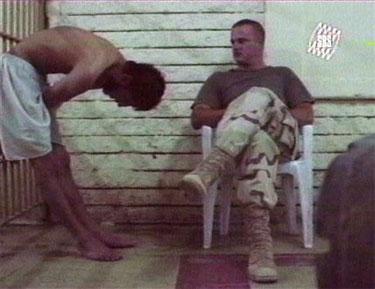
A Good War is Hard to Find by David Griffith (Soft Skull). This slim study of violence and visual culture in America explores the cultural conditions that prepared the way for the Abu Ghraib photograph scandal. Two elements rescue the book from banal American self-hatred and soft lefty self-righteousness: first, Griffith's idiosyncratic involvement of Catholic social teachings in his approach to cultural critique; second, his first-person reckoning with the wider problems that the Abu Ghraib images signal, which admits a personal culpability in their creation as much as it accepts a personal responsibility for their correction.

Thanks, Randy! I highly recommend his novel. I had the pleasure of reading an advanced copy of it recently. It is that rare breed of book that begins as ambitiously as it ends, not shying away or taking the easy way out when confronting the complex issues of racial prejudice, assimilation, local politics and the manners of an entire nation.

May 03, 2006

Final Blurb for Book Compares Good War to Merton

Got the last blurb for the book just before the "drop-dead" date--the point of no return in publishing lingo--from Greg Wolfe, editor of Image, the only literary journal dedicated to Judeo-Christian art and artists. Click on the title of this post and check out Image's Web site.

Here's what he said:

David Griffith is a writer to watch--politically engaged and bitingly funny, but never shrill. His passion for social justice is grounded in his understanding of art and religion-two forms of vision that, rightly understood, increase our awareness of irony and ambiguity rather than stifle them. This combination of talents and interests is rare indeed: Griffith is working the same territory as Thomas Merton in books like Conjectures of a Guilty Bystander and Seeds of Destruction. In short, this is cultural criticism with a soul.

Highest Ranking Abu Ghraib Officer to Date to be Charged

Amnesty Says Abuse in U.S. Detention Facilities 'Widespread' Despite Denials

March 28, 2006

Sr. Helen Gets Standing "O" at Valpo

Went to see Sr. Helen Prejean last night at Valparaiso University. Man, she's a force of nature. I definitely was on the verge of tears a couple times. I picked up her new book, The Death of Innocents, and had her sign it. I also thanked her for blurbing my book. More later....

March 27, 2006

Toronto-Based "This Magazine" Gives Good Review

The first review of my book is out from This Magazine, a well-known and long running Toronto-based alternative magazine of politics and culture. Below is the review by Brian Joseph Davis.

The Jam once ambivalently sang, "A smash of glass and the rumble of boots, an electric train and a ripped up phone booth, paint splattered walls and the cry of a tom cat, lights going out and a kick in the balls ... that's entertainment." It's a sentiment also echoed in Davis Griffith's first person essay, A Good War Is Hard to Find.

Focusing mostly on the strangeness of the Abu Ghraib torture photos and '90s-style transgressive culture, Griffith's thesis is that society is suffering a disconnect between its feelings and the images we produce. As a subjective essay, A Good War takes its time in saying what it wants to say, but Griffith's impassioned and always-questioning mind makes the journey worthwhile. Even if you disagree with him (as I do), take comfort that someone is asking uncomfortable questions about what makes what worthy of humour, or disgust.


Not bad, huh? "Impassioned and always questioning mind"--I can live with that. I'm happy that he's honest in his disagreement of the thesis. Go to This' Website by clicking the title of this post.

March 15, 2006

Haunting Photograph: Abu Ghraib Icon or Political Opportunist?


Salon.com is reporting that the New York Times got the wrong man in its front page feature on the alleged man-behind-the- hood in the now iconic photo from Abu Ghraib prison (see the orginal article here: http://www.nytimes.com/2006/03/11/international/middleeast/11ghraib.html). Click the title of this link for the Salon account.

It seems fitting that the identity of this man is hard to pinpoint. I don't know why I think that. I guess it's as though that this man--whoever he is--is a sort of bogeyman, an apparition that embodies the horror of the Iraq war. Just as the tomb of the unknown soldier in any country touched by war inspires mournful respect and reflection, the photo of the unknown torture victim inspires frustration and anger. As Donald Rumsfeld said: "Those pictures never should have gotten out." It's safe to say that Susan Sontag was right: "Photographs haunt."

March 13, 2006

Death of a Christian Peacemaker a "Wake Up Call"?

The Catholic Peace Fellowship (http://www.cpfblog.blogspot.com/) has a
number of wonderful posts up at the moment. Check out the lovely post about
the death of Tom Fox, a member of the Chrisitian Peacemaker team that was
kidknapped months ago. The post takes on pundits who believe the murder of Fox is a wake-up call for "naive peaceniks" who feel they can make a difference by going to Iraq--or wherever strife exists--and acting as an instrument of Christ's
peace. Also check out the CPF's posts on the ROTC debacle at Marquette University.

March 04, 2006

Times Op-Ed: Use of Dogs at Abu Ghraib Understood as "Legal"


An Op-Ed by ex-Army interrogator ANTHONY LAGOURANIS published in the February 28, 2006 NYT discusses how confusion among soldiers, and double-speak on the part of top brass, as to how detainees at Abu Ghraib should be considered (POW? Enemy Combatant? Insurgent?) lead to following through with orders that are clear violations of the Geneva Conventions.

March 01, 2006

What It Takes to Be a Conscientious Objector

The Catholic Peace Fellowship has a great story (click on the title of this post for the story) about a soldier who applied for Conscientious Objector staus, got it, and then was Honorably Discharged from the Army. Now the Army is trying to change his discharge status to "General," which would deprive him of many benefits, like the GI Bill. Click on the link at the bottom of the story to see excerpts from his statement of conscience, which is needed in order to make a successful bid for CO status.

Which gets me thinking: Wouldn't it be great to gather together statements of conscience and put them together in a big book? What would you say in your statement of conscience?

Gay Porn Used in Guantanamo Interrogations

The Nation's blog is reporting on an ACLU report in which FBI agents conducting interrogations at Gitmo witnessed the use of Gay pornographic films as an interrogation tool. Click on the title of this post for the whole story.

Since the beginning of the war we have been hearing allegations that the military's plan of attack against the "Islamic male" is rooted in an understanding of Middle Eastern culture's sense of shame, specifically when it comes to sexuality. The Abu Ghraib photos seem to support such allegations of a systematized approach to "softening up" detainees.

However, the fact that the ACLU is breaking this story doesn't bode well for its acceptance as "fact." In my experience, here in the middle west, the ACLU is given no more cred than a grocery store tabloid.

How do we combat such prejudice?

February 23, 2006

Radical Nun Big On Book


Sister Helen Prejean, author of Dead Man Walking, which was made into a film starring Sean Penn and Susan Sarandon, is the first to offer a blurb for my forthcoming book.

Below is the email she sent me.

Dear Dave,

We need your book.

All the best...

Sister Helen

BLURB:

Griffith offers gripping personal testimony to the difficulties of living out the Christian imperatives of love and forgiveness amid a culture that legitimizes government violence as the only "real" way to establish social order.

Short and to the point. Punchy. I hope my book lives up to it.

Click on the title of this post to see her website, in which she argues persuasively for the abolition of capital punishment. And while you're at it buy Dead Man Walking: ww.amazon.com/gp/product/0679751319/sr=8-2/qid=1140705069/ref=pd_bbs_2/002-9023702-9307200?%5Fencoding=UTF8

February 21, 2006

Here's a number to remember: 14,000

Anti-war.com reports that there are over 14,000 Iraqis incarcerated in U.S. military prisons.

Perform For Us All that We Love and Hate

The title of this post is phrase I wrote in the margins of Susan Sontag's "Regarding the Pain of Others" while researching my book. It just sort of popped into my head. I think it came about from thinking about this passage from Sontag:

"All images that display the violation of an attractive body are, to a certain degree, pornographic. But images of the repulsive can also allure. Everyone knows that what slows down highway traffic going past a horrendous car crash is not only curiosity. It is also, for many, the wish to see something gruesome. Calling such wishes "morbid" suggests a rare aberration, but the attraction to such sights is not rare, and is a perennial source of inner torment."

While I take issue with Sontag's thesis from her New York Times Magazine article, "Regarding the Torture of Others," that what happened at Abu Ghraib was due to America's porn addiction, there is an aspect of the abuse that is related to the experience of porn. This is where I think the title of the post comes in. The allure of images that show a violated body, especially images of sodomy and rape, comes from a deep desire to participate in such acts but knowing that they are morally and culturally wrong. As a result, we have men like Charles Graner using detainees as proxies to act out these pornographic fantasies. So the photos allow for a "safe" gratification of these urges while debasing and punishing the detainees.

Bagram Airbase Case Being Tanked

Tim Golden, the New York Times Pulitzer-winning journalist who has been covering this Bagram Airbase story, must be pissed. He's been reporting on this well-documented, seemingly open and shut case of abuses (and, frankly, murders) at an airbase in Afghanistan that happened in December 2002, before the Abu Ghraib abuse ocurred.

The linked article, which came out last week, reports that every one involved is getting off with either a slap on the wrist or time served. Check out this interview with Golden: http://www.cjrdaily.org/the_water_cooler/tim_golden_on_digging_deep_tim.php

Salon.com First With "New" Abu Ghraib Photos


Well, first an Australian news service puts out some never-before-seen (by the public at least) Abu Ghraib photos and now Salon.com.

The implication in the new photos, as far as I can tell, is that the use of nakedness and sexual humiliation is/was/is systematic and is/was/is communicated from the top down.

Investigators from the Army revealed "a total of 1,325 images of suspected detainee abuse, 93 video files of suspected detainee abuse, 660 images of adult pornography, 546 images of suspected dead Iraqi detainees, 29 images of soldiers in simulated sexual acts, 20 images of a soldier with a Swastika drawn between his eyes, 37 images of Military Working dogs being used in abuse of detainees and 125 images of questionable acts."

This is a heck of alot more images than I imagined existed. The implication here is that early allegations might be right: photographically documenting the abuses was part of a systemic regimen of psychological tactics designed to wear down the "Arab male." It just seems like way too many images and videos to be the work of some sadistic shutterbugs with a lot time on their hands.

I still stand by assessment, which appears in my forthcoming book in a chapter titled "City of Lost Souls," that the actual taking of such photos constituted an act of power and control over the detainees that reestablished the guards' sense of just-world thinking. This is one of the tactics torture states use to retain their torturers--they find ways of demonizing and dehumanizing the enemy so that the torturers feel they are carrying out necessary work against an evil foe. Peter Suedfeld's "Psychology and Torture," a source book on the Psychological dimension of torture and torturing, is a must for anyone trying to understand this phenomena on a more clinical level. It contains articles by several of the most prominent thinkers in this field.

January 04, 2006

In the Same Breath as John Stewart?: Book's Cover one of the 50 Best

I got this email from the designer of my forthcoming book, Brett Yasko ( brettyasko.com )

Hi David

We went to New York City to see our book in AIGA’s “50 Books, 50 Covers” exhibition.

At the beginning of the exhibit was a “Chair Statement” from Cheryl Towler Weese and I wanted to send you the final paragraphs of it:

“Four politically activist works are of particular note, and others pepper the group, representing the full range of production values: America (The Book), A Good War is Hard to Find, NorthSouthEastWest, and the opulent Something Lived, Something Dreamed. Books like these, in particular, are an encouraging reflection of contemporary American culture – the way we live, work and think – as well as the state of American designers’ ambitions and ethics. To paraphrase the artist and critic Johanna Drucker, there’s a critical question these designers have asked themselves in taking on these projects: ‘Who are we designing for, and to what ends?’

“What we design reflects what we deem important – and the doggedly persistent flourishing of the book industry and book design leaves me optimistic.”

A Room of One's Own


Here's a shot of my "office." I'm doing this as a test. I got a digital camera for Christmas, and I'm trying to figure out how to upload photos.

Let me narrate: The bulletin board bears a few motivational images. The first is a photo roster of my students, which reminds me that they're counting on me to know what the hell I'm doing. The second is a black and white photo (maybe by Richard Avedon) of my man John Cheever sitting on a set of stone steps looking haggard. It reminds me that drinking and writing are a dangerous mix. The last is a Polaroid of Flannery O'Connor's grave stone in Milledgeville, GA. (My wife and I went there last Christmas on our way to visit her folks in Louisiana.) Kind of morbrid, but she's still my biggest literary crush.